

G100 420C Stainless Steel Ball is widely recognized as a high-performance precision component designed for applications that require excellent hardness, wear resistance, corrosion resistance, and dimensional accuracy. From industrial bearings and valves to automotive systems and precision equipment, the quality of stainless steel balls directly influences product reliability and service life. This article explains the key features, advantages, applications, selection factors, and practical benefits of G100 420C Stainless Steel Ball to help buyers understand why it has become a preferred solution for demanding industrial environments.
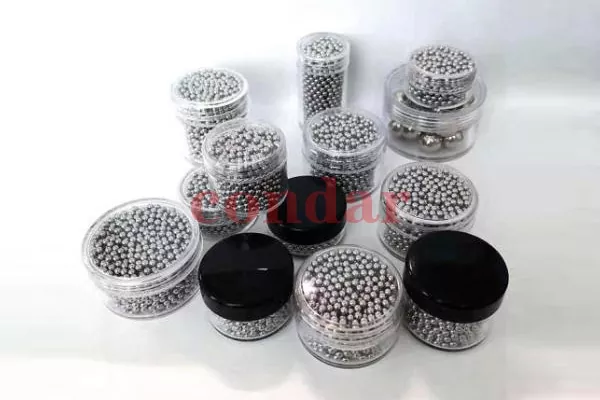
G100 420C Stainless Steel Ball is a precision-engineered stainless steel ball manufactured from 420C martensitic stainless steel. It is designed to provide a combination of high hardness, excellent wear resistance, and stable mechanical performance in demanding industrial conditions.
The term “G100” represents the precision grade of the steel ball. According to international standards for bearing balls, a lower grade number indicates tighter dimensional tolerance, better roundness, and improved surface quality. A G100 stainless steel ball offers reliable accuracy for applications where consistent movement and reduced friction are important.
420C stainless steel is a high-carbon stainless steel material known for its ability to achieve high hardness after heat treatment. Compared with many general stainless steel materials, 420C provides stronger resistance against abrasion and deformation, making it suitable for mechanical parts that experience continuous contact and pressure.
For companies seeking stable performance and long-term reliability, choosing a professional manufacturer such as Yuncheng Kangda Steel Ball Co., Ltd. can help ensure that every stainless steel ball meets strict production requirements and application expectations.
Industrial buyers often face challenges such as premature wear, inconsistent product quality, corrosion problems, and unexpected maintenance costs. G100 420C Stainless Steel Ball addresses these issues through its balanced material properties and precision manufacturing process.
| Feature | Description | Customer Benefit |
|---|---|---|
| High Hardness | 420C stainless steel can achieve excellent hardness after heat treatment. | Improves wear resistance and extends service life. |
| Precision Grade G100 | Manufactured with strict dimensional accuracy and roundness control. | Ensures smooth operation and stable performance. |
| Corrosion Resistance | Provides better corrosion protection than ordinary carbon steel balls. | Suitable for environments exposed to moisture or chemicals. |
| Excellent Surface Finish | Polished surface reduces friction during operation. | Supports quieter and more efficient equipment performance. |
| Strong Mechanical Strength | Maintains structural stability under pressure and repeated movement. | Reduces replacement frequency and operating costs. |
One of the most important advantages of G100 420C Stainless Steel Ball is its high hardness. During industrial operation, steel balls often experience continuous rolling, impact, and friction. Materials with insufficient hardness may quickly develop surface damage, affecting the entire system.
The heat treatment process of 420C stainless steel improves its hardness and wear resistance, allowing the ball to maintain its shape and performance over extended operating periods. This makes it especially suitable for precision machinery where reliability is essential.
Precision is a critical factor when selecting stainless steel balls. Even a small dimensional difference can influence equipment efficiency, vibration levels, and product lifespan.
G100 precision grade ensures strict control over diameter variation, roundness, and surface quality. This accuracy helps manufacturers create products with smoother motion, reduced friction, and improved operational stability.
Choosing the correct steel ball is not only about material selection. It directly affects equipment efficiency, maintenance requirements, and overall production costs. G100 420C Stainless Steel Ball provides several practical improvements for industrial users.
Many buyers focus only on size and price when purchasing steel balls, but material quality determines actual performance. A low-quality steel ball may appear economical initially but can create additional costs through equipment downtime, repairs, and frequent replacements.
420C stainless steel provides a practical balance between hardness, corrosion resistance, and cost efficiency. It is an ideal choice for industries requiring dependable components without compromising performance.
Because of its excellent mechanical properties, G100 420C Stainless Steel Ball is used across multiple industries. Its versatility makes it an important precision component for manufacturers worldwide.
| Industry | Typical Applications | Main Requirements |
|---|---|---|
| Bearing Industry | Precision bearings and mechanical movement systems | High accuracy, smooth rotation, wear resistance |
| Automotive Industry | Fuel systems, steering components, valves | Durability and stable performance |
| Medical Equipment | Precision instruments and devices | Clean surface, reliability, corrosion resistance |
| Valve Manufacturing | Ball valves and flow control systems | Hardness and sealing performance |
| Industrial Machinery | Automation equipment and precision mechanisms | Long service life and accurate movement |
For manufacturers producing high-performance equipment, selecting a reliable stainless steel ball supplier is an important step in maintaining product quality. Professional companies like Yuncheng Kangda Steel Ball Co., Ltd. focus on precision manufacturing and consistent quality management to meet different industrial requirements.
When selecting stainless steel balls for industrial applications, buyers often compare different materials and precision grades. Each type has unique advantages, but G100 420C Stainless Steel Ball stands out because of its combination of hardness, wear resistance, and dimensional accuracy.
| Material Type | Main Characteristics | Suitable Applications | Limitations |
|---|---|---|---|
| 420C Stainless Steel Ball | High hardness, excellent wear resistance, good corrosion resistance | Bearings, valves, precision machinery, automotive components | Not recommended for extremely aggressive chemical environments |
| 304 Stainless Steel Ball | Excellent corrosion resistance and general durability | Food equipment, decorative products, chemical environments | Lower hardness and wear resistance compared with 420C |
| 316 Stainless Steel Ball | Superior corrosion resistance, especially against salt and chemicals | Marine equipment, medical devices, chemical industries | Usually lower hardness than 420C |
| Carbon Steel Ball | High strength and economical cost | General mechanical applications | Poor corrosion resistance without additional protection |
For applications where wear resistance and precision are more important than extreme corrosion resistance, G100 420C Stainless Steel Ball is often a more suitable choice. It provides a reliable balance between performance and cost efficiency.
Choosing the right stainless steel ball requires careful consideration of several technical factors. A correct selection can improve equipment performance, reduce maintenance expenses, and increase product reliability.
Different applications require different levels of accuracy. G100 grade is suitable for many precision applications where stable dimensions and smooth operation are necessary.
Before purchasing, customers should confirm requirements related to diameter tolerance, roundness, surface roughness, and overall application conditions.
Although 420C stainless steel offers good corrosion resistance, the working environment should always be evaluated. Factors such as humidity, temperature, chemicals, pressure, and operating speed can influence product performance.
The performance of a stainless steel ball depends not only on the raw material but also on manufacturing technology. Important production processes include precision grinding, polishing, heat treatment, and inspection.
A professional manufacturer should have strict quality control procedures to ensure every batch maintains consistent dimensions and surface quality.
High-quality G100 420C Stainless Steel Ball requires advanced manufacturing processes and detailed inspection procedures. Reliable production ensures that every steel ball performs consistently in demanding applications.
Yuncheng Kangda Steel Ball Co., Ltd. focuses on producing precision steel balls with reliable quality control systems. By combining professional manufacturing experience with strict inspection procedures, the company helps customers obtain stable and high-performance steel ball solutions.
The supplier you choose directly affects the quality and reliability of your final products. Working with an experienced manufacturer can help avoid common purchasing problems, including inconsistent dimensions, unstable material performance, and delayed production schedules.
A trustworthy supplier should provide:
For global buyers, supplier reliability is especially important because stainless steel balls are often used in critical components. A small quality issue may lead to significant equipment problems.
| Customer Challenge | G100 420C Stainless Steel Ball Solution |
|---|---|
| Frequent component replacement | High hardness improves wear resistance and extends service life. |
| Equipment vibration and instability | High precision supports smoother mechanical operation. |
| Performance decline caused by surface damage | Excellent finishing reduces friction and surface wear. |
| Unstable supplier quality | Professional manufacturing ensures consistent product standards. |
G100 420C Stainless Steel Ball combines precision manufacturing with the advantages of 420C stainless steel, including high hardness, wear resistance, and reliable mechanical performance. Compared with ordinary steel balls, it provides better durability and stability in demanding applications.
It is commonly used in bearing manufacturing, automotive components, valves, industrial machinery, precision equipment, and other applications requiring accurate movement and long service life.
Yes. 420C stainless steel provides good corrosion resistance compared with carbon steel. However, the exact performance depends on environmental conditions, exposure time, and application requirements.
The G100 grade indicates a high level of precision control. It helps ensure better roundness, dimensional consistency, and smoother operation, which are important for precision mechanical applications.
Customers should evaluate supplier experience, production technology, inspection methods, material certification, and quality consistency before making a purchasing decision.
Selecting the right stainless steel ball supplier can make a significant difference in product performance, production efficiency, and long-term operating costs. With professional manufacturing capabilities and a commitment to quality, Yuncheng Kangda Steel Ball Co., Ltd. provides dependable G100 420C Stainless Steel Ball solutions for customers worldwide.
Whether you need standard sizes, customized specifications, or technical support for a specific application, our experienced team is ready to provide professional assistance. Contact us today to discuss your requirements and discover a reliable stainless steel ball solution designed for your industry.