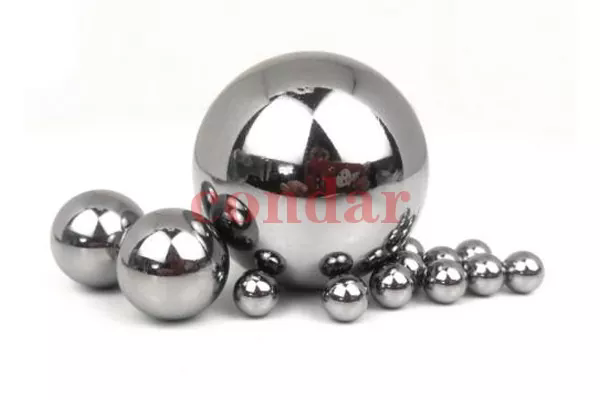
Corrosion resistance is one of the most important factors when selecting a Stainless Steel Ball for industrial applications. Although stainless steel is widely associated with resistance to rust, its performance depends on more than the material name alone. Chromium content, alloy composition, heat treatment, surface condition, manufacturing quality, and the surrounding operating environment all influence how effectively a ball resists corrosion. A grade that performs reliably in a dry mechanical assembly may deteriorate much faster when exposed to saltwater, acidic cleaning agents, chloride-containing process fluids, or repeated wet and dry cycles. For procurement professionals, understanding these differences is essential to choosing a component that meets application requirements without creating unnecessary material costs or premature replacement expenses.
At Yuncheng Kangda Steel Ball Co., Ltd., material selection and product requirements should be evaluated in relation to the actual working conditions rather than relying on a general description such as rustproof or corrosion resistant. Buyers need to establish which steel grade is suitable, how the surface has been finished, what dimensional and mechanical requirements apply, and whether the supplier can provide traceable material documentation. This guide explains the main factors affecting corrosion resistance, compares common stainless steel grades, outlines practical supplier evaluation methods, and identifies the information buyers should request before placing an order. The objective is to help industrial purchasers make a technically sound decision based on operating conditions, service life expectations, and total cost of ownership.
1. What Material Properties Determine Corrosion Resistance?
2. How Do Surface Finish and Manufacturing Processes Affect Performance?
3. Which Industrial Environments Require Different Stainless Steel Grades?
4. How Can Buyers Evaluate Specifications and Supplier Quality?
5. Conclusion: How Can Buyers Select the Right Stainless Steel Ball?
The first step in selecting a corrosion resistant steel ball is understanding the relationship between alloy composition and the protective behavior of stainless steel. Stainless steel does not resist corrosion simply because it looks bright or contains iron with a polished surface. Its performance relies on a combination of alloying elements and the ability of the material to form and maintain a thin protective oxide film. When the material is appropriate for its environment, this film helps limit further chemical attack. When the surrounding conditions exceed the material's resistance, localized damage can develop even when the component initially appears clean and undamaged.
Chromium is the principal element responsible for the characteristic corrosion resistance of stainless steel. Stainless steels generally contain at least approximately 10.5 percent chromium, although the exact composition varies by grade and applicable specification. Exposure to oxygen allows a chromium-rich passive film to form on the surface. This film is extremely thin, but it can significantly reduce the rate at which the underlying metal reacts with the environment. If the surface is scratched or otherwise disturbed, the passive film can often reform under suitable conditions.
However, the presence of chromium does not make every stainless steel grade equally resistant to corrosion. The effectiveness of the passive film depends on alloy composition, surface cleanliness, temperature, solution chemistry, and the availability of oxygen. In an aggressive chloride environment, for example, a grade with insufficient resistance may develop small pits that penetrate the surface. A component can therefore suffer substantial localized damage without showing widespread red rust.
Other alloying elements affect the balance between corrosion resistance, strength, hardness, and manufacturing characteristics. Buyers should evaluate the complete grade designation rather than comparing materials by chromium content alone.
Several grades are commonly considered for precision balls, valve components, fluid-handling equipment, and general industrial assemblies. Their suitability depends on the exact composition, product form, manufacturing condition, and service environment. The following table provides a preliminary comparison rather than a universal ranking.
| Material grade | General characteristics | Potential application areas | Important limitations |
| 304 stainless steel | Common austenitic grade with good general corrosion resistance and broad industrial use. | General machinery, selected valves, consumer equipment, and moderate service environments. | May be unsuitable for sustained exposure to aggressive chlorides, seawater, or certain process chemicals. |
| 316 stainless steel | Molybdenum-bearing austenitic grade with improved resistance to pitting and crevice corrosion in many chloride environments. | Fluid-handling assemblies, selected marine components, and chemical processing equipment. | Not immune to chloride attack, crevice corrosion, or stress corrosion cracking under unfavorable conditions. |
| 316L stainless steel | Low-carbon version of 316, often selected where sensitization during welding or related thermal processing is a concern. | Equipment with applicable low-carbon material requirements and selected corrosive-service applications. | Low carbon does not guarantee suitability for every acid, chloride concentration, or operating temperature. |
| 420 stainless steel | Martensitic stainless steel that can achieve relatively high hardness through appropriate heat treatment. | Selected wear-resistant balls, mechanical assemblies, and applications requiring a combination of hardness and moderate corrosion resistance. | Generally offers less corrosion resistance than common 304 or 316 grades, particularly in aggressive environments. |
| 440C stainless steel | High-carbon martensitic stainless steel widely associated with high hardness and wear resistance after suitable heat treatment. | Precision bearings and other applications where hardness and wear resistance are important. | Its corrosion resistance is not equivalent to that of 316, and surface condition and heat treatment matter considerably. |
Hardness and corrosion resistance are different material properties. A high-hardness ball may be suitable for contact loading, repeated rolling, or wear-intensive service, but this does not automatically make it the best choice for corrosive fluids. In fact, buyers often face a trade-off between the corrosion resistance of an austenitic grade and the hardness achievable with a martensitic grade.
For example, a precision bearing used in a damp industrial environment may require both dimensional stability and wear resistance. If the assembly also encounters chloride-containing wash water, the procurement team must determine whether the proposed grade offers an acceptable balance of mechanical and chemical performance. Selecting a softer, more corrosion-resistant material without reviewing load requirements could introduce another failure mode. Conversely, selecting a high-hardness material solely for its mechanical properties could result in unacceptable corrosion.
At Yuncheng Kangda Steel Ball Co., Ltd., buyers should identify the required balance among corrosion resistance, hardness, dimensional accuracy, and operating life before confirming a material specification. A Stainless Steel Ball should be selected against the actual application rather than a single headline property. For reliable purchasing decisions, request the exact grade designation, the relevant material standard, and documentation that connects the supplied batch to the agreed specification.
The central purchasing principle is straightforward: the best material is the one that satisfies the complete operating specification. A higher alloy grade may reduce replacement frequency in a demanding environment, but it can also increase initial cost without providing a meaningful benefit in a mild environment. Comparing actual risks and performance requirements is more useful than automatically choosing the most expensive available grade.
Material grade establishes the basic corrosion-resistance potential of a component, but the manufacturing process determines how effectively that potential is retained in the finished product. Two balls produced from the same nominal stainless steel grade may behave differently if their surfaces contain different levels of contamination, roughness, inclusions, or processing damage. This distinction is especially important in precision applications because the ball's surface is both a functional contact area and the interface between the material and its surrounding environment.
A rough surface may contain small valleys, scratches, irregularities, and areas where process residues remain. These features can retain moisture, dirt, salts, or chemical residues. Under unfavorable conditions, the trapped environment may become more aggressive than the surrounding fluid. Local differences in oxygen concentration can also contribute to localized corrosion processes. These effects are particularly relevant when components remain wet for long periods or operate in assemblies where cleaning and drainage are limited.
A smoother surface can improve cleanability and reduce locations where deposits accumulate. Nevertheless, smoothness alone cannot compensate for an unsuitable alloy. A highly polished 304 component may still experience chloride-induced pitting under conditions that exceed its resistance, while a properly manufactured 316 component may perform better in the same environment. Surface finish and material grade must therefore be assessed together.
Buyers should also avoid treating a visual shine as a technical acceptance criterion. A reflective surface does not prove a specific roughness value, chemical composition, or corrosion-test result. If surface quality affects product performance, define the required finish using an agreed specification and a suitable measurement method. Where roughness is important, request the applicable Ra limit or another recognized surface-texture parameter, together with the inspection method and sampling plan.
Manufacturing quality is not determined by polishing alone. Each processing stage can affect the final component, and the relevance of a particular stage depends on the ball grade, diameter, intended precision, and application.
No. Passivation is a surface-conditioning process intended to improve the condition of the passive surface, not to turn an unsuitable alloy into a universally corrosion-proof material. Depending on the process and the component's condition, suitable passivation can remove free iron contamination and help restore a clean, corrosion-resistant surface. It cannot eliminate the fundamental limitations of the alloy in an aggressive environment.
For procurement purposes, the important questions concern process suitability, process control, and verification. Ask whether passivation is included in the manufacturing specification, whether it is required for the selected grade, and how the supplier verifies that the treatment meets the agreed requirements. ASTM A967/A967M is one recognized reference for chemical passivation treatments of stainless steel parts, but the applicable revision and acceptance requirements should be agreed between the purchaser and supplier.
Buyers should also distinguish passivation from electropolishing, coating, and ordinary cleaning. These processes serve different purposes and should not be used interchangeably in a technical specification. If a product requires a special surface treatment, the purchase order should state the treatment, applicable standard if relevant, acceptance criteria, and any restrictions on subsequent handling.
Surface contamination is a frequent source of avoidable corrosion problems. For instance, carbon steel particles transferred from shared tooling or handling equipment can leave iron contamination on a stainless steel surface. If moisture is present, these contaminants may produce rust staining that is incorrectly attributed to failure of the stainless steel itself. Such staining does not necessarily mean that the entire component has lost its corrosion resistance, but it requires investigation.
Other risks include deep scratches, embedded abrasive material, heat-treatment scale, chemical residues, and surface damage created during storage or transport. Inclusions or metallurgical irregularities may also influence localized corrosion under certain conditions. The severity depends on the defect, the alloy, and the environment; buyers should not assume that every minor mark will cause failure or that every visible defect is harmless.
| Inspection item | Information to specify | Procurement purpose |
| Surface finish | Required roughness, visual acceptance limits, and measurement method where applicable. | Controls cleanability, contact performance, and surface consistency. |
| Heat treatment | Required condition, hardness range, and agreed verification method. | Connects mechanical performance with the intended material condition. |
| Passivation | Whether treatment is required, the applicable procedure, and acceptance criteria. | Reduces uncertainty about surface cleanliness and treatment control. |
| Contamination control | Handling, cleaning, and packaging requirements. | Limits avoidable surface contamination before installation. |
| Final inspection | Sampling frequency, defect limits, and records to be supplied. | Establishes a consistent basis for incoming quality control. |
At Yuncheng Kangda Steel Ball Co., Ltd., the most useful purchasing discussion is one that translates broad expectations into measurable requirements. Our factory's actual manufacturing capabilities and available treatments should be confirmed against the specific order rather than assumed from a generic product description. For a Stainless Steel Ball intended for demanding service, ask for documented evidence of the agreed surface, dimensional, and material requirements. This approach helps the buyer separate verified product characteristics from general marketing claims and makes supplier performance easier to evaluate over repeated orders.
Corrosion resistance is always relative to the environment in which a component operates. The same ball may remain in good condition for years in a clean, dry mechanism but show localized corrosion after a much shorter period in a chloride-rich process. For this reason, selecting a grade from a product catalogue without defining the operating environment is an unreliable purchasing method. Buyers need to consider not only the main process fluid but also cleaning procedures, intermittent exposure, temperature fluctuations, deposits, and the time the component remains wet.
Ordinary moisture does not affect every stainless steel component in the same way. A clean, dry environment generally presents a lower corrosion risk than one where water remains trapped around the component. When water contains chloride ions, the risk of localized corrosion can increase because chloride can destabilize the passive film under susceptible conditions. Chloride exposure may come from seawater, brine, deicing salts, cleaning products, process chemicals, or contamination deposited during handling.
Grade 304 is commonly used in general industrial environments, but it may not provide adequate resistance in sustained or aggressive chloride exposure. Grade 316 generally offers improved resistance to pitting and crevice corrosion because of its molybdenum content. However, 316 is not immune to chloride-related corrosion, especially where temperature, concentration, deposits, crevices, or applied stress create severe conditions. Seawater service, in particular, requires careful application-specific assessment rather than an automatic assumption that 316 will be suitable.
Buyers should describe the actual exposure instead of using vague terms such as wet environment or marine grade. Useful information includes chloride concentration where known, maximum operating temperature, exposure duration, cleaning frequency, and whether the component is continuously immersed or exposed only to occasional splashes. If the fluid composition is uncertain, an application review or representative corrosion testing may be necessary.
Acid resistance varies significantly with acid type, concentration, temperature, impurities, and the presence of oxidizing or reducing conditions. A material that performs acceptably in one acid solution may corrode rapidly in another. The same caution applies to alkaline solutions, disinfectants, and industrial cleaning chemicals. Product names alone are not enough to establish compatibility because commercial formulations can contain multiple active ingredients.
For process equipment, the purchasing team should obtain chemical compatibility information from the chemical supplier or a qualified materials specialist. Review the normal operating condition as well as cleaning-in-place cycles, unexpected concentration changes, and potential mixing of chemicals. A ball that is exposed only to a process fluid during operation may experience more aggressive conditions during cleaning than during production itself.
In food processing, pharmaceutical equipment, and other hygiene-sensitive applications, corrosion resistance is only one part of the specification. Buyers may also need to consider cleanability, surface condition, contamination control, applicable regulatory requirements, and compatibility with cleaning and sanitizing procedures. The fact that a material is stainless steel does not, by itself, establish compliance with a particular industry or product-contact standard.
Precision assemblies present a different selection challenge because corrosion resistance must be balanced against load capacity, wear resistance, dimensional stability, and friction-related performance. A bearing ball experiences repeated contact stresses, and the selected material must meet the mechanical requirements of the assembly. In applications where moisture or corrosive fluids are also present, buyers must determine whether a corrosion-resistant austenitic grade or a harder martensitic grade offers the better overall solution.
Martensitic stainless steels such as 420 and 440C can achieve high hardness under suitable processing conditions and are commonly considered where wear resistance is important. Their corrosion resistance, however, generally does not match that of 316 in aggressive chloride environments. Conversely, common austenitic grades can provide stronger general corrosion resistance but may not achieve the same hardness as high-carbon martensitic grades. The correct choice depends on the bearing design, loading conditions, lubrication, exposure, and acceptable maintenance interval.
| Operating environment | Primary corrosion concern | Material selection approach | Additional checks |
| Clean indoor machinery | Occasional humidity and surface contamination. | Evaluate common grades such as 304 where mechanical requirements permit. | Storage conditions, cleaning, and surface quality. |
| Outdoor equipment | Rain, condensation, pollution, and deposited salts. | Assess exposure severity before choosing between general-purpose and higher-alloy options. | Drainage, maintenance, and seasonal conditions. |
| Marine or saltwater exposure | Chloride-induced pitting, crevice corrosion, and possible stress corrosion cracking. | Evaluate 316 or other suitable materials against actual service conditions; do not assume 316 is universally sufficient. | Temperature, immersion, deposits, and corrosion-test evidence. |
| Chemical processing | Acid, alkali, solvent, or mixed-chemical attack. | Match the grade to the exact chemical composition and operating conditions. | Concentration, temperature, cleaning cycles, and compatibility data. |
| Food and pharmaceutical equipment | Cleaning chemicals, moisture retention, and contamination risks. | Evaluate corrosion resistance together with hygiene and regulatory requirements. | Surface finish, cleanability, documentation, and product-contact requirements. |
| Precision bearings | Combined corrosion, contact stress, wear, and lubrication-related risks. | Balance hardness, dimensional performance, and environmental resistance. | Load, speed, lubrication, tolerances, and service life. |
| Water treatment systems | Variable water chemistry, dissolved salts, and disinfectants. | Base selection on the actual water analysis and treatment process. | Chloride levels, temperature, stagnation, and chemical dosing. |
General corrosion removes material relatively evenly from an exposed surface, while localized corrosion attacks specific areas. Pitting corrosion creates small cavities that can become deep even when the overall surface remains bright. Crevice corrosion can occur in confined areas where fluid exchange is restricted, while stress corrosion cracking may develop when susceptible material is exposed to particular corrosive conditions under tensile stress.
These mechanisms matter because a component can lose functional reliability before widespread visible rust appears. In precision equipment, a small pit may affect contact behavior, dimensional integrity, or fatigue performance. In a valve or fluid-handling assembly, localized damage may lead to leakage, rough operation, or an unacceptable maintenance burden.
For this reason, procurement specifications should be based on the likely failure mechanisms rather than visual appearance alone. Depending on the application, buyers may need a recognized corrosion test, an agreed acceptance criterion, or validation under representative operating conditions. A generic salt spray result should not be treated as a direct prediction of service life unless the test is relevant to the material, surface condition, and intended environment.
Yuncheng Kangda Steel Ball Co., Ltd. should be evaluated against the application requirements defined by the buyer, including the exact grade, intended environment, and inspection expectations. Before purchasing a Stainless Steel Ball for corrosive service, provide the supplier with realistic operating data and ask which material options can be supported by verifiable documentation. Where the consequences of failure are significant, involve the equipment designer or materials engineer in the final decision rather than relying solely on a general-purpose grade recommendation.
A technically suitable material can still produce disappointing results if the purchase order does not clearly define what is being supplied. Procurement teams should therefore turn application requirements into an unambiguous specification that covers material grade, size, tolerance, surface condition, mechanical properties, documentation, inspection, and packaging. This process also makes quotations easier to compare because different suppliers are responding to the same technical requirements instead of making different assumptions about the intended product.
The appropriate parameters depend on the application and the supplier's product range. The following table is a specification framework for buyers to complete and confirm. It is not a declaration of the standard production range or certified capabilities of Yuncheng Kangda Steel Ball Co., Ltd. All order-specific values should be confirmed before the purchase order is issued.
| Parameter | What the buyer should specify | Why it matters |
| Product type | Stainless steel ball and its intended function. | Establishes the basic product and performance requirements. |
| Material grade | Exact grade designation and applicable material standard. | Defines the required alloy composition and material identity. |
| Diameter | Nominal diameter and permitted dimensional deviation. | Ensures compatibility with the mating assembly. |
| Roundness | Maximum permitted deviation from the required spherical geometry. | Supports consistent rolling, contact, and precision performance. |
| Surface finish | Roughness requirement, visual criteria, and inspection method. | Controls surface quality and helps reduce contamination-related uncertainty. |
| Hardness | Required range, scale, test method, and applicable condition. | Confirms suitability for wear and mechanical loading. |
| Corrosion requirements | Target environment, applicable test method, and acceptance criteria. | Links material selection to the intended operating conditions. |
| Inspection | Sampling plan, dimensional checks, defect criteria, and required records. | Creates a consistent basis for acceptance or rejection. |
| Traceability | Batch identification and material documentation requirements. | Helps connect delivered products to the agreed material specification. |
| Packaging | Packaging type, cleanliness requirements, labeling, and transport protection. | Reduces the risk of damage or contamination before installation. |
Supplier statements should be supported by evidence appropriate to the order's risk and technical requirements. A material certificate, when required and available, should identify the material grade and provide the relevant chemical composition or other specified information. Buyers should check that the documentation corresponds to the supplied batch and the agreed standard. A generic certificate that cannot be connected to the delivered goods provides limited assurance.
Mechanical properties also require suitable verification. Hardness testing, dimensional inspection, and surface evaluation should follow methods appropriate to the product and applicable specifications. Because different test methods have different limitations, the purchase order should identify the method and acceptance criteria rather than merely requesting that the product be tested. For critical applications, the parties may agree on inspection records, third-party verification, or a defined sampling plan.
Corrosion testing needs the same discipline. Different tests evaluate different exposure conditions and failure mechanisms. Salt spray testing, for example, can be useful for certain comparative evaluations, but its results cannot automatically be translated into a number of years of service in a real industrial environment. A meaningful test plan must identify the method, exposure conditions, evaluation criteria, sample preparation, and relevance to the actual application.
A useful quotation does more than provide a unit price. It allows the purchaser to identify exactly which product and quality requirements are included in the offer. When reviewing quotations, request clear answers to the following questions.
For international B2B procurement, these questions are particularly useful when several manufacturers appear to offer similar products. A lower unit price may not represent the lowest overall cost if the quotation excludes necessary inspection, packaging, surface treatment, or documentation. On the other hand, buyers should not pay for premium testing or processing that does not address a real application risk. The goal is to establish a technically adequate specification with a transparent commercial scope.
The purchase price is only one component of the cost of a precision ball. Other factors include inspection, installation, maintenance, downtime, replacement frequency, and the consequences of unexpected failure. In applications where corrosion can cause equipment shutdown or contamination, a material with a higher initial cost may be economically preferable if it demonstrably reduces lifecycle risk. In mild environments, an unnecessarily expensive grade may deliver little practical benefit.
Buyers can compare options using a structured assessment. First, identify the expected operating life and the cost of replacing the component. Second, estimate the impact of maintenance and unplanned downtime. Third, evaluate whether a more corrosion-resistant material has credible evidence of better performance under the actual operating conditions. Finally, compare the total expected cost rather than assuming that either the lowest price or the highest alloy content is automatically the best choice.
For example, a manufacturer selecting balls for a general-purpose indoor assembly may prioritize dimensional consistency, suitable hardness, and stable supply. A purchaser sourcing components for chloride-containing fluid equipment may place greater emphasis on alloy compatibility, surface condition, traceability, and application-specific corrosion validation. Both decisions can be correct because the risk profile differs.
Once a material and specification have been approved, preserve the technical requirements in the purchase order and incoming inspection plan. Avoid replacing an exact grade designation with a vague term such as stainless steel, and do not allow a material substitution without an agreed review. Keep records of batch identification, dimensional inspection, material documentation, and any corrosion-test results that were part of the acceptance criteria.
Changes in manufacturing location, raw material source, surface treatment, or heat-treatment process may warrant additional review when they can affect the agreed product properties. The extent of verification should reflect the risk of the application. Critical components may require tighter controls than noncritical products used in benign environments.
Yuncheng Kangda Steel Ball Co., Ltd. can be considered as part of the supplier evaluation process when the required grade, specifications, documentation, and commercial terms have been clearly established. Our purchasing recommendation is to confirm the technical scope in writing before placing a production order and to agree on the evidence required for acceptance. This gives both parties a common reference point if questions arise during inspection or subsequent use.
To obtain a useful quotation, provide the supplier with the product diameter, required grade, quantity, dimensional tolerances, surface requirements, hardness range if applicable, working environment, and any special documentation or inspection requirements. If the component will contact a process fluid, include the fluid composition where known, operating temperature, exposure duration, and cleaning conditions. If the final assembly has specific loading or precision requirements, include those details as well.
Where the exact grade has not yet been established, explain the application and ask for technically justified alternatives. A responsible selection process should make the trade-offs between corrosion resistance, hardness, cost, and manufacturing constraints clear. It should not rely on a promise that one grade is suitable for every environment.
Our factory's available diameters, tolerances, material grades, surface treatments, and testing arrangements should be confirmed for the requested order. Buyers should request written confirmation of all critical requirements, especially when the application involves corrosive chemicals, marine exposure, precision bearings, or equipment where component failure has significant consequences.
By combining a clear technical specification with documented supplier verification, procurement teams can reduce uncertainty, compare quotations more fairly, and improve consistency between initial samples and repeat production. This is a more dependable basis for long-term purchasing than choosing a component solely by appearance, general material name, or advertised corrosion resistance.
The corrosion resistance of a Stainless Steel Ball depends on the interaction between material composition, surface condition, manufacturing quality, and the operating environment. Chromium enables the passive film that protects stainless steel, while elements such as molybdenum and nickel influence the performance of particular grades. However, no grade should be regarded as universally corrosion-proof. Chloride concentration, temperature, chemical exposure, moisture retention, mechanical stress, and contamination can all affect the final result.
For buyers, the most effective approach is to begin with the operating conditions, determine the balance of corrosion resistance and mechanical performance, and then define measurable acceptance criteria. Confirm the exact grade, diameter, dimensional tolerances, surface finish, hardness where applicable, inspection methods, documentation, and packaging requirements. When the application is demanding, request relevant corrosion testing or technical review instead of relying on a general material description or a visual inspection alone.
Yuncheng Kangda Steel Ball Co., Ltd. should be assessed on its ability to meet the confirmed product specification and provide the agreed quality documentation. Before purchasing, share your required dimensions, material preference, quantity, and working environment so the available options can be evaluated against your actual needs. Contact Yuncheng Kangda Steel Ball Co., Ltd. to discuss your Stainless Steel Ball requirements, confirm order-specific technical parameters, and request a quotation based on your application, inspection expectations, and delivery schedule. A clearly defined specification is the first step toward reliable component performance and more predictable procurement costs.
Grade 316 contains molybdenum, which generally improves resistance to chloride-induced pitting and crevice corrosion compared with grade 304. This makes 316 a common candidate for selected marine, fluid-handling, and chemical-processing applications, but performance still depends on chloride concentration, temperature, surface condition, deposits, and exposure duration. Neither grade is universally suitable for every corrosive environment, so buyers should verify compatibility with the actual operating conditions.
Yes. Polishing can improve surface smoothness and cleanability, but it cannot compensate for an unsuitable alloy or eliminate every source of corrosion. Chloride exposure, embedded iron contamination, chemical residues, surface damage, and stagnant moisture can contribute to staining or localized attack. Buyers should specify the required material grade and surface finish separately and evaluate corrosion performance under conditions relevant to the intended application.
Buyers should identify the corrosion mechanism of concern, the applicable test method, exposure conditions, sample preparation, evaluation criteria, and acceptance limits before ordering. A recognized method such as an applicable ASTM corrosion or passivation standard may be appropriate, depending on the purpose of the test. Salt spray results should not automatically be interpreted as a prediction of real-world service life; testing should be relevant to the actual material, surface condition, and operating environment.
440C can provide high hardness and wear resistance after appropriate heat treatment, which makes it useful in selected precision bearing and mechanical applications. However, its corrosion resistance is generally lower than that of 316 in aggressive chloride environments, and performance depends on processing, surface finish, and exposure conditions. Buyers should evaluate load, wear, moisture, chemical exposure, and maintenance requirements together before approving 440C for a specific application.
Before placing an order, confirm the exact material grade, applicable standard, diameter, dimensional tolerances, roundness, surface finish, hardness requirements, and any required passivation or corrosion testing. Also establish the operating environment, inspection and sampling criteria, batch traceability, material documentation, packaging, lead time, and nonconformance procedure. Request written confirmation that the quoted product meets the agreed specification, and obtain application-specific technical advice when the consequences of corrosion-related failure are significant.