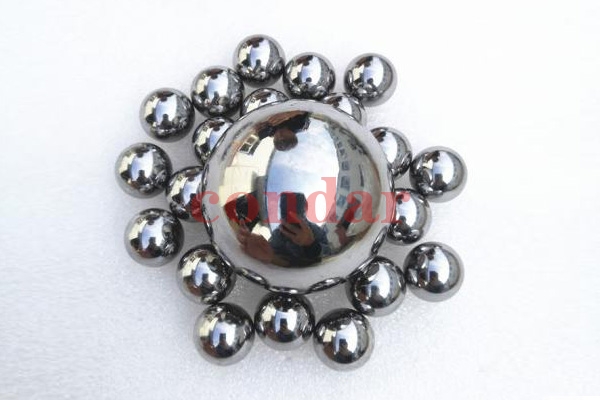
As one of the core components of a bearing, the surface quality of steel balls has a crucial impact on the overall performance of the bearing. In particular, issues such as bearing vibration, noise, and abnormal sounds can often be traced back to the quality of the steel ball's surface. Today, Kangda Steel Balls will conduct an in-depth discussion from multiple perspectives on the relationship between steel ball surface quality and bearing vibration, noise, and abnormal sounds, aiming to provide valuable reference for bearing manufacturers and users.
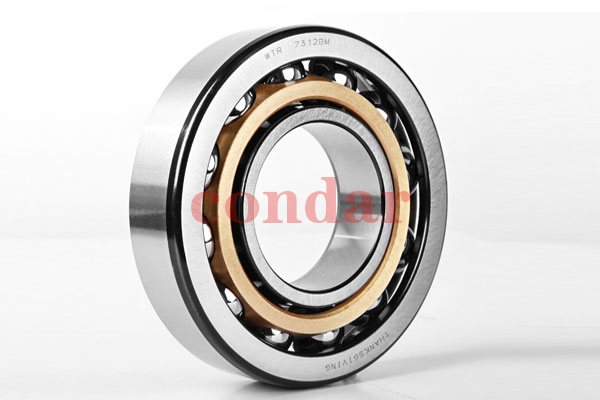
First, we need to clarify that bearing vibration, noise, and abnormal sounds are three interrelated but distinct concepts. Vibration refers to the mechanical fluctuations generated by the bearing during operation, which can be measured using vibration sensors. Noise is the sound perceived by the human ear when this vibration is transmitted into the air. Abnormal sounds, on the other hand, refer to unusual noises emitted by the bearing beyond normal operation, which typically indicate that there is some kind of defect or fault in the bearing. A large number of experimental studies have shown that the surface quality of the rolling elements has a significant impact on all three aspects.
The outer raceway surface, inner raceway surface, and ball surface are three critical contact surfaces in a bearing. The friction and interaction between them determine the operating performance of the bearing. However, the impact of these three surfaces on bearing vibration, noise, and abnormal sound is not the same. Specifically, the outer raceway surface has the smallest impact, the inner raceway surface has the next level of impact, and the ball surface has the greatest impact. This proportionality (1:3:10) reveals the core position of ball surface quality in bearing performance.
Various defects present on the surface of steel balls, such as scratches, cluster spots, pits, single spots, scuffs, and small flat tops, are important factors leading to bearing vibration, noise, and abnormal sounds. The causes of these defects are diverse, possibly originating from inherent material defects, errors during the manufacturing process, improper heat treatment, or contamination in the usage environment. When these defects are relatively large and deep, they generate significant friction and impact during bearing operation, causing an increase in the bearing assembly's vibration value and producing noticeable noise. This type of noise is typically continuous and high-frequency, posing a serious threat to the bearing's service life and reliability.
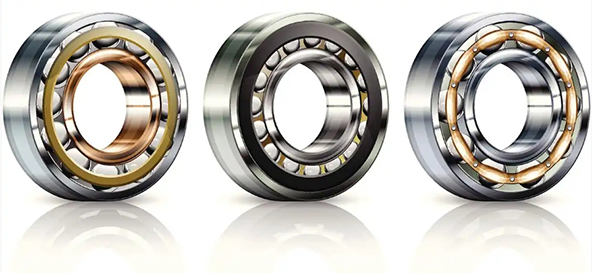
By comparison, when the defects on the surface of the steel balls are small and shallow, their impact on bearing vibration is relatively minor. However, these tiny defects can still cause abnormal noise in the bearing under certain conditions. This abnormal noise typically manifests as intermittent low-frequency sounds, which, although not as harsh as noise, are still worth being alert to. Because the occurrence of abnormal noise often indicates that there is some potential fault or damage inside the bearing. If measures are not taken in time for repair or replacement, it may lead to more serious consequences.
Among various defect forms of surface quality on steel balls, deep scratches, coarse streaks, large wheat-like particles, clustered spots, pits, and small flat tops are several typical and significantly impactful ones. These defects usually have large dimensions and depths, which have a significant effect on the vibration and noise performance of bearings. In particular, defects such as deep scratches and coarse streaks not only reduce the smoothness of bearing operation but may also cause stress concentration and fatigue damage inside the bearing, thereby shortening the bearing's service life.
It is worth noting that bearing noise and abnormal sounds caused by the surface quality of steel balls usually have a non-periodic characteristic. This means that the occurrence of these sounds does not follow a certain time interval or frequency, but is random and unpredictable. Such non-periodic sounds pose great difficulties for bearing fault diagnosis and maintenance. Therefore, in practical applications, we need to use more refined detection and analysis methods to accurately determine the source of bearing noise and abnormal sounds, so as to take timely measures for repair or replacement.